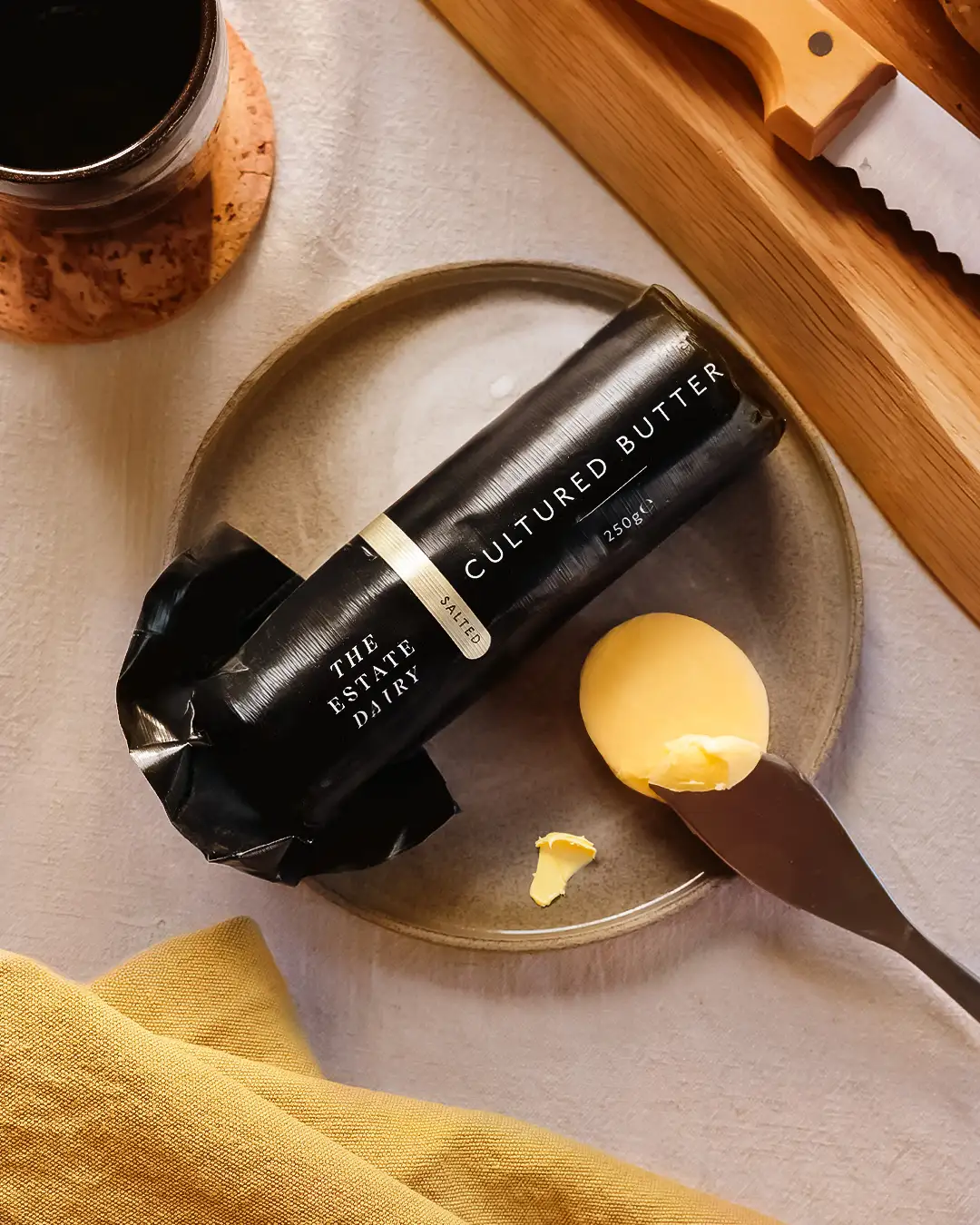
There is a moment, about two minutes into a pan of butter over a low flame, where the kitchen tips. The foam drops. The smell turns nut-brown. Little specks settle at the bottom of the pan. You have about ten seconds before it goes too far. That window is where this dish lives. Good butter taken to the edge, spooned over carrots still sweet from spring, landing on a bed of cold Jersey milk cottage cheese.
Twenty-five minutes, start to plate.
• 1 bunch small carrots (around 300g), scrubbed
• 3 tbsp Estate Dairy salted butter 1 tbsp runny honey
• 200g Estate Dairy Jersey milk cottage cheese
• 2 tbsp chopped dill, plus more to finish
• 1/4 cup hazelnuts, toasted and roughly chopped
• 1/2 a lemon
• Sea salt, black pepper
1. Dry the carrots well. Halve any that are fatter than your thumb.
2. Melt the butter in a wide pan over medium-low heat. Let it foam, fall, and turn nut-brown with little flecks on the base. Take it off the heat the moment you smell toasted hazelnut. Pour two thirds into a bowl and set aside.
3. Return the pan to the heat. Add the carrots, season, and leave them still for two minutes to colour. Turn, and cook for another six to nine minutes until tender and caramelised.
4. In the last two minutes, add the honey and a squeeze of lemon. Toss toglaze.
5. Stir the cottage cheese with the dill and a pinch of salt. Spread across two shallow bowls.
6. Land the carrots on top. Drizzle the reserved brown butter over, flecks and all. Finish with hazelnuts, lemon zest, more dill, and a grind of pepper. Eat straight away, while the carrots are still warm against the cool cottage cheese.
The cottage cheese does the work. Made from Jersey milk, it carries a higher fat than standard cottage cheese, with curds that hold their shape under something warm. Ricotta works if you have to substitute, though it is richer and less tangy. If the butter goes too dark, start again. Brown butter and burnt butter are different things, and you will catch it sooner next time.
Carrots are the season’s answer. In autumn, swap for squash. In summer, blistered tomatoes. In winter, charred leeks.