Brown Butter Carrots with Jersey Milk Cottage Cheese

There is a moment, about two minutes into a pan of butter over a low flame,
where the kitchen tips. The foam drops. The smell turns nut-brown. Little
specks settle at the bottom of the pan. You have about ten seconds before it
goes too far.
What is Unhomogenised Milk?
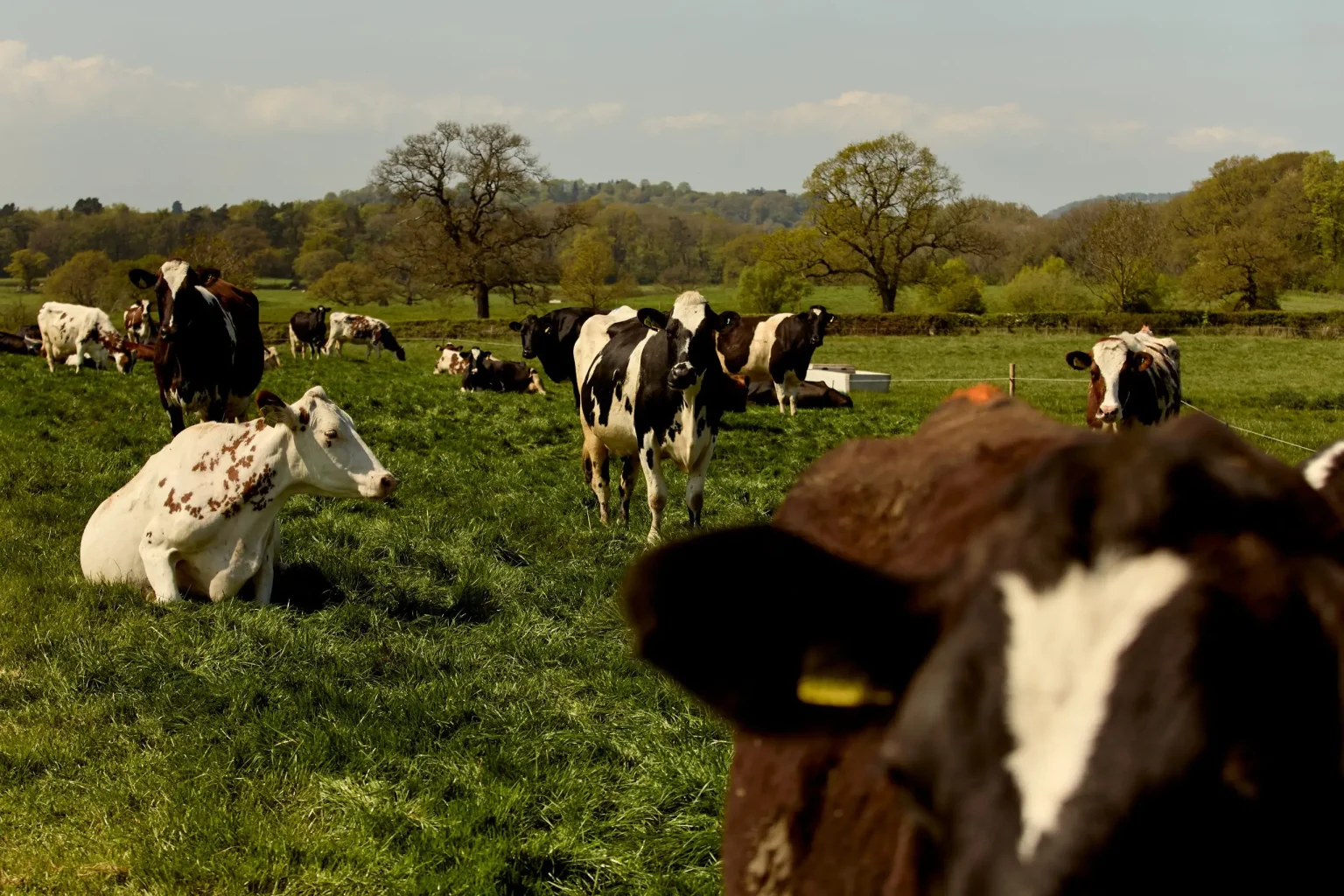
Leave a bottle of our milk on the counter for a morning and something happens. A pale, buttery layer drifts to the top, thicker than the rest, almost the colour of straw. This is the cream line, the clearest sign you’re holding unhomogenised milk.
First Grass
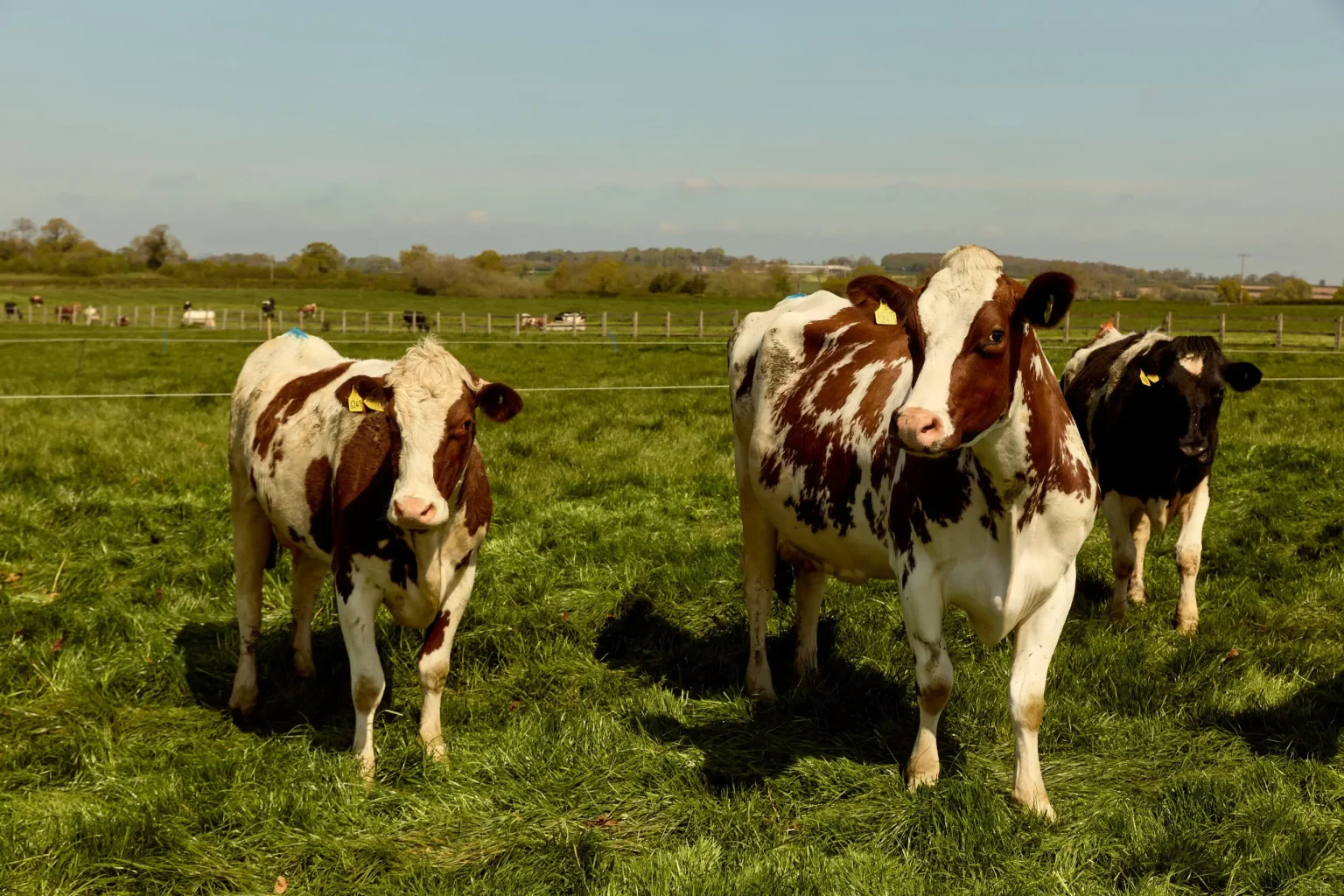
It happens in a single morning. Someone unpins a gate, and the herd walks out of the yard onto grass for the first time in months. They stand for a minute and do nothing. Then one of them puts her head down, and the rest follow.
What Is Cultured Butter?
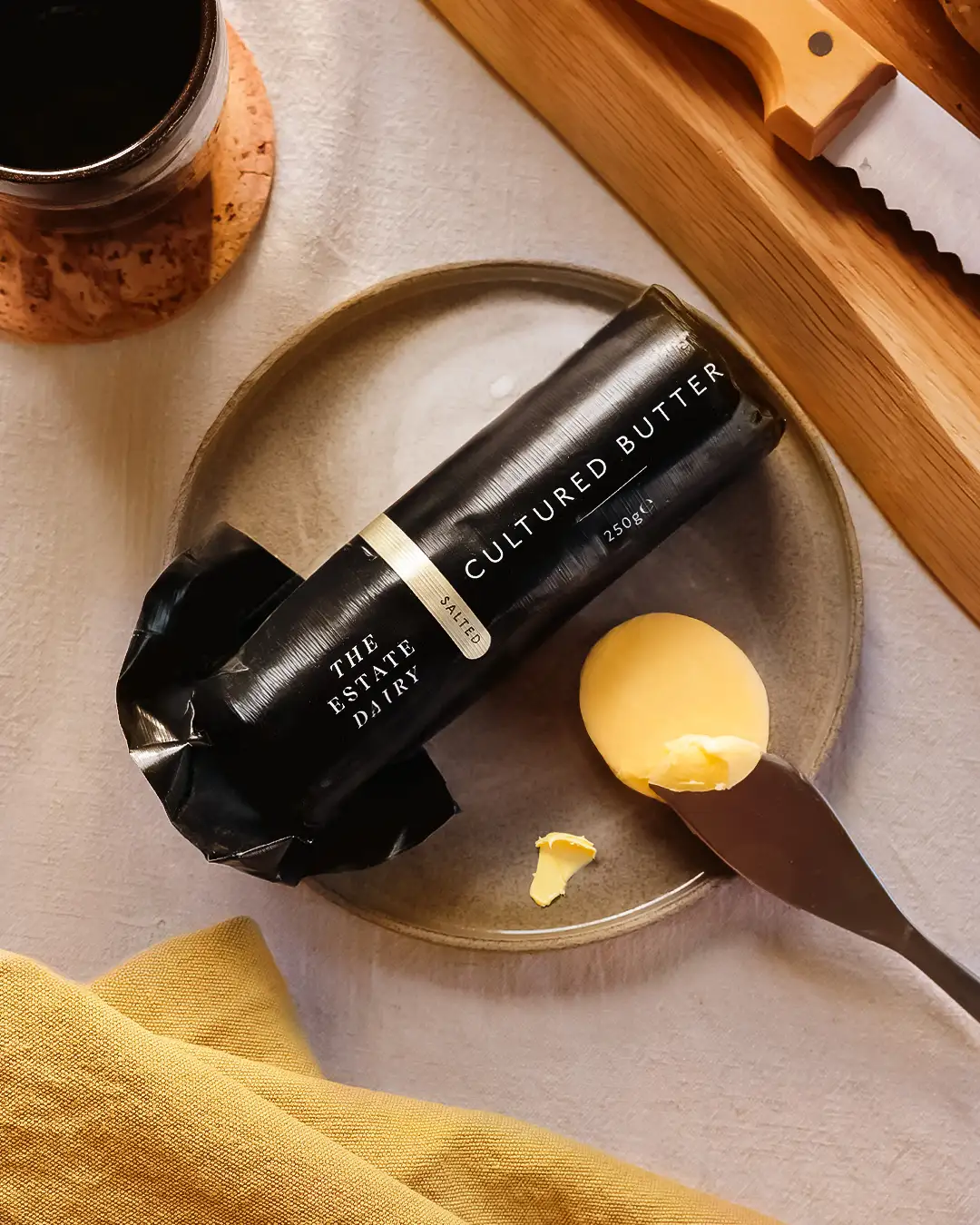
Before it is butter, it is crème fraîche. It sits in our dairy at Cholmondeley, pale and thick, smelling faintly of yoghurt. This is not the finished product. Our cultured butter begins as cream, ripened slowly with live cultures until it becomes crème fraîche, with all the weight and tang and depth you know from a good spoonful on a soup or a tart. Only then does it go to the churn. What we pour in is crème fraîche. What comes out is butte
Why We Make Unhomogenised Milk
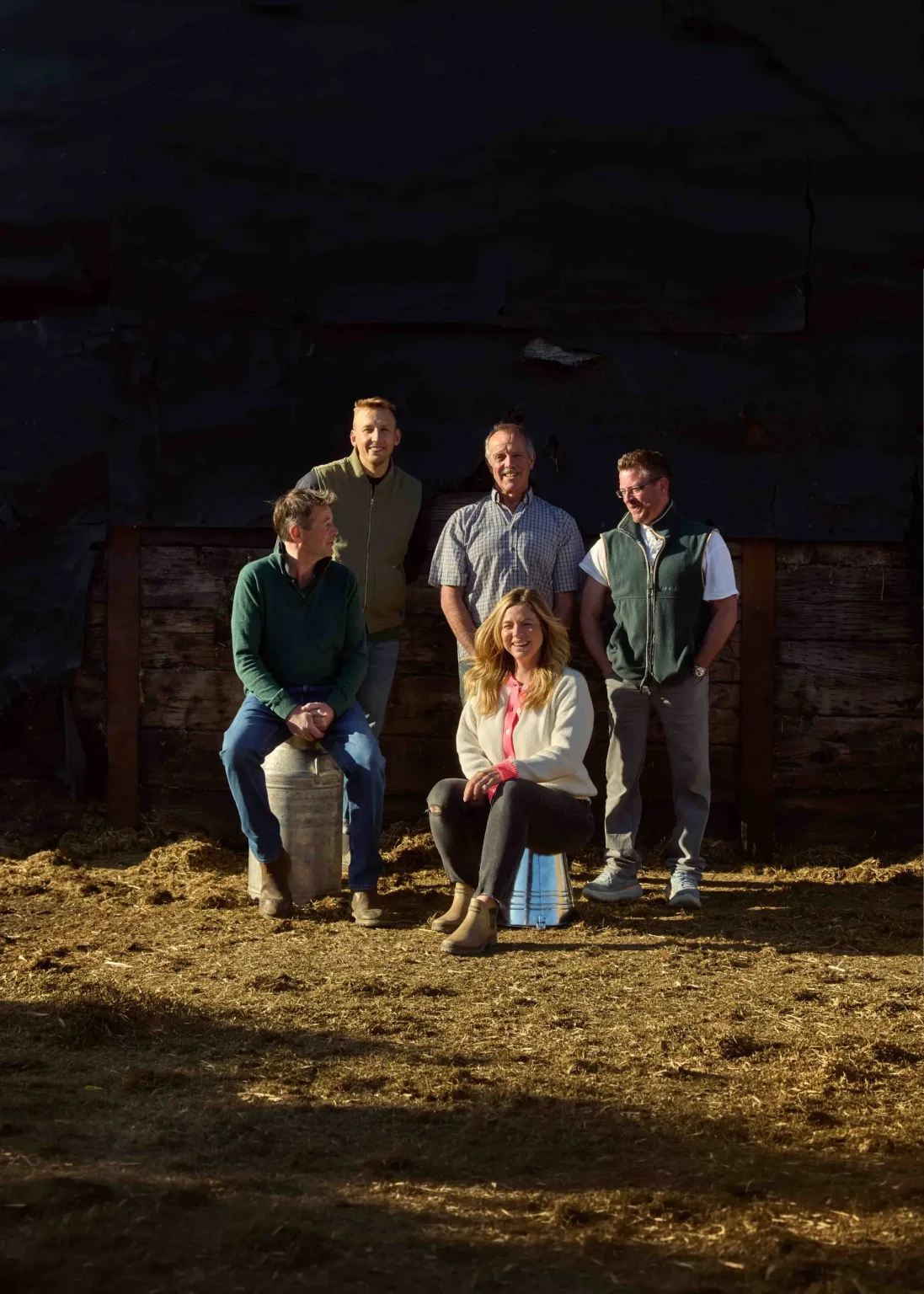
Rebecca’s dad was the first person to say it out loud. A cattle farmer in
Cheshire, he had spent a lifetime around livestock and could tell good work
from bad on instinct. British retail milk, he reckoned, had drifted from what a
good dairy cow can produce. There was room for someone to do it properly.